Kids and Classroom Christmas Card Crafts That Teach Compassion & Motor Skills
Disclosure: This post may contain affiliate links and advertisements. I may earn a commission at no additional cost to you. Content is supported with Ai and is for entertainment purposes only.
Kids and Classroom Christmas Card Crafts That Teach More Than You Think
There’s something incredibly special about receiving a Christmas card made by a child. Parents save them. Grandparents frame them. Teachers tuck them into drawers.
I’ve loved both summer and winter cards from swim students and elementary classrooms — the uneven handwriting, the glittery fingerprints, and the heartfelt messages always matter more than perfection.
Plus, these cards are more than crafts. They’re tiny lessons in kindness, communication, motor skills, and confidence. These skills stick with kids longer than we realize.
Also, be sure to read until the end to try a loving self reflection letter to Santa with your little one!
Why Making Christmas Cards Helps Kids Grow (In Real Ways)
Little Hands, Big Skill Building
- Card making quietly builds fine motor skills through cutting, gluing, peeling stickers, and placing decorations.
- These movements strengthen hand muscles needed for writing, buttoning coats, and everyday classroom tasks.
- Practical example: Even choosing where to place a sticker helps kids practice control and spatial awareness.
Learning the Basics of Letter Writing
- Writing “Dear ___” and ending with “Love” or “Sincerely” introduces kids to real-world writing structure. It helps them understand that writing has a beginning, middle, and end — and a purpose.
- Practical example: A child writing to a classmate learns how writing connects people, not just grades.
Social-Emotional Learning Through Compassion
- When kids think about who they’re making a card for, they practice empathy. They learn to consider what someone else might enjoy reading or seeing.
- Practical example: Asking, “What would make Grandma smile?” helps children step outside themselves in a gentle, age-appropriate way.
Step-by-Step Christmas Card Craft (Classroom-Friendly)
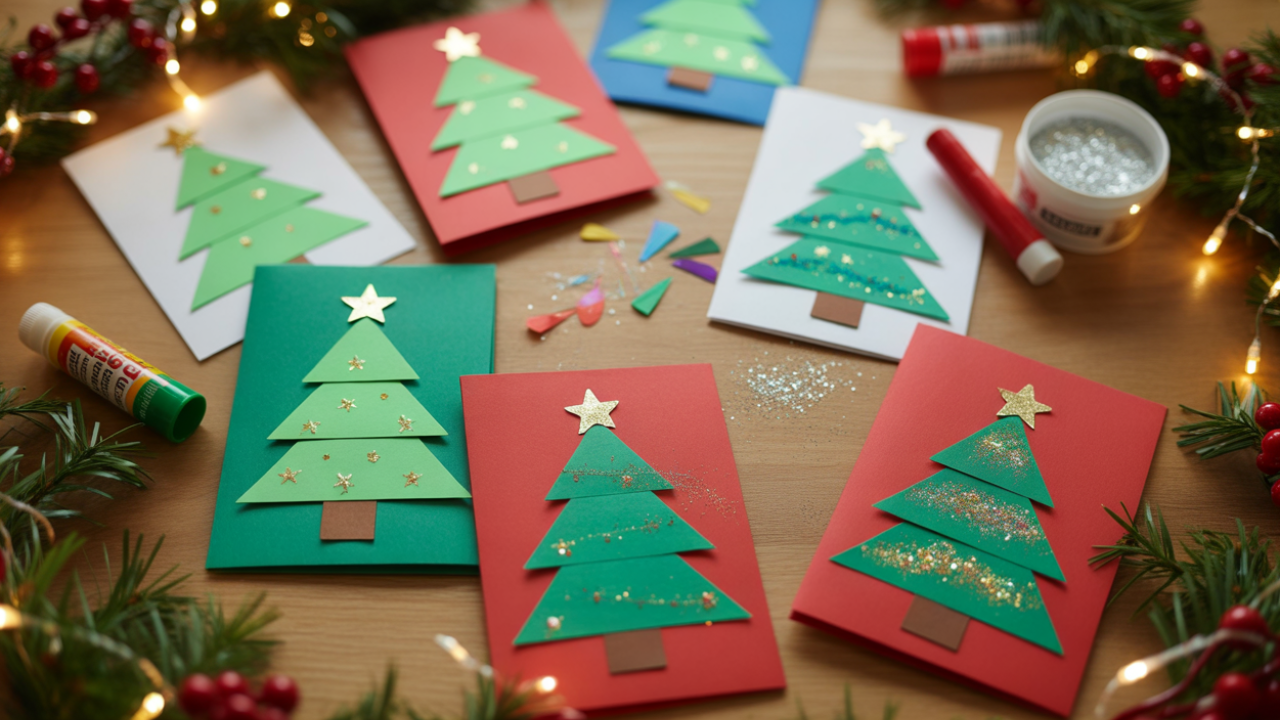
Step 1: Choose Christmas Paper That Sets the Mood
Start with festive kid themed Christmas construction paper or card stock in reds, greens, blues, or winter neutrals. This gives kids a strong base and teaches them to think about presentation. Why it works: Thicker paper is easier for little hands to manage and holds decorations better.
Step 2: Add Foam Stickers for Easy Success
Sparkling Christmas foam stickers are raised, colorful, and peel easily — perfect for younger kids who may struggle with glue. They also create instant dimension. Why it works: Kids get quick wins without frustration, boosting confidence and focus.
Step 3: Finish With Glitter or Sticker Gems
Glitter accents or easy adhesive gem stickers let kids personalize their cards and feel proud of the finished result. Less is more — one or two sparkly details is plenty. Why it works: These details encourage creativity while teaching restraint and decision-making.
Fun Writing Prompts Kids Can Use Inside Their Cards
Sometimes kids want to write — they just don’t know where to start. These prompts guide them gently without taking over their voice.
• Who is this card for, and why do you like them?
• What is one kind thing they’ve done for you?
• What is something fun you like to do together?
• What do you hope they enjoy during the holidays?
• What makes this person special to you?
These prompts help kids write meaningful messages without pressure.
Common Issues Kids Run Into (And How to Help)
“I Don’t Know What to Write”
This is very common. Kids may freeze when faced with a blank space. Offer sentence starters rather than full sentences. Helpful fix: Write the first words together, then let them finish the thought.
Frustration With Mistakes
Misspelled words or crossed-out letters can feel overwhelming to kids who want things “just right.” Helpful fix: Normalize mistakes by reminding them that the message matters more than neatness.
Frequently Asked Questions From Parents and Teachers
What age can kids start making Christmas cards?
Even toddlers can participate by coloring or placing stickers, while older kids can write full messages. Adapt the activity to their skill level.
Should spelling be corrected?
For classroom or family cards, focus on effort and meaning. You can lightly assist if the child asks for help. You can always provide erasable gel pens to allow the student to write in flow, and then make spelling or grammatical corrections later.
How long should this activity take?
Plan for 20–40 minutes depending on age. Short, focused sessions work best.
Can this be done with large groups?
Yes. Set up stations with limited supplies at each table to keep things organized and calm.
Writing a Santa Letter: A Reflection Activity Kids Love
Santa letters are a wonderful extension of card writing and help kids reflect on their growth.
• Start with greeting Santa politely
• Share one thing the child did well this year
• Mention something they’re proud of
• Acknowledge one area they’re working to improve
• End with gratitude, love, and holiday wishes
You can even add a cute Santa Mailbox to make more of a connection where Santa can write back reaffirming what as gone well and great ideas for doing better in other areas. This approach teaches honesty, self-awareness, and responsibility — all wrapped in holiday magic.
You might also like blog posts: Burgundy, Nutcracker, & Bow Christmas Card Crafts and Whimsical Christmas Card Crafts for a new twist on card making!
Final Thoughts: Small Cards, Big Impact
Kids and classroom Christmas card crafts are about more than paper and stickers. They teach fine motor skills, writing structure, empathy, and emotional expression all while creating something tangible and heartfelt.
You can also have kids read their message out loud to a partner before sealing the card. This builds confidence and helps them hear how their words sound.
Additionally, have your students or kids collect cards and deliver them together to another class, friends, loved ones, staff members, or community helpers to help build social skills.
Years from now, the card may still be tucked in a drawer or taped to a fridge. That’s the real magic — kids seeing and learning that their words matter.
If you’re looking for a meaningful, low-pressure holiday activity that checks educational boxes and warms hearts, this is one worth repeating every year. 💛
Warmly,
Jenna
Get Profitable Online!
Clearly Entrepreneurially Elevated
Learn how to become profitable through blogs with affiliate links, videos with ads, memberships, coaching, and events.
All women deserve higher levels of love, health, wealth, and abundance. Follow your passions.
Freebies are Fun!
Join our amazing newsletter with fun tips, & receive the following feel good freebies:
- Opt In For Today's Freebie: "The #1 Reason Why People Purchase"
The number one reason people buy isn’t typically logic— This freebie reveals how to communicate your offers in a way that helps connect the dots. Move authentically towards more sales! Fulfill your mission.